
Sydney Park Walk
Wetlands, brickworks and stormwater on Gadigal Country
3 checkpoints
1.4 km
~45 minutes walk
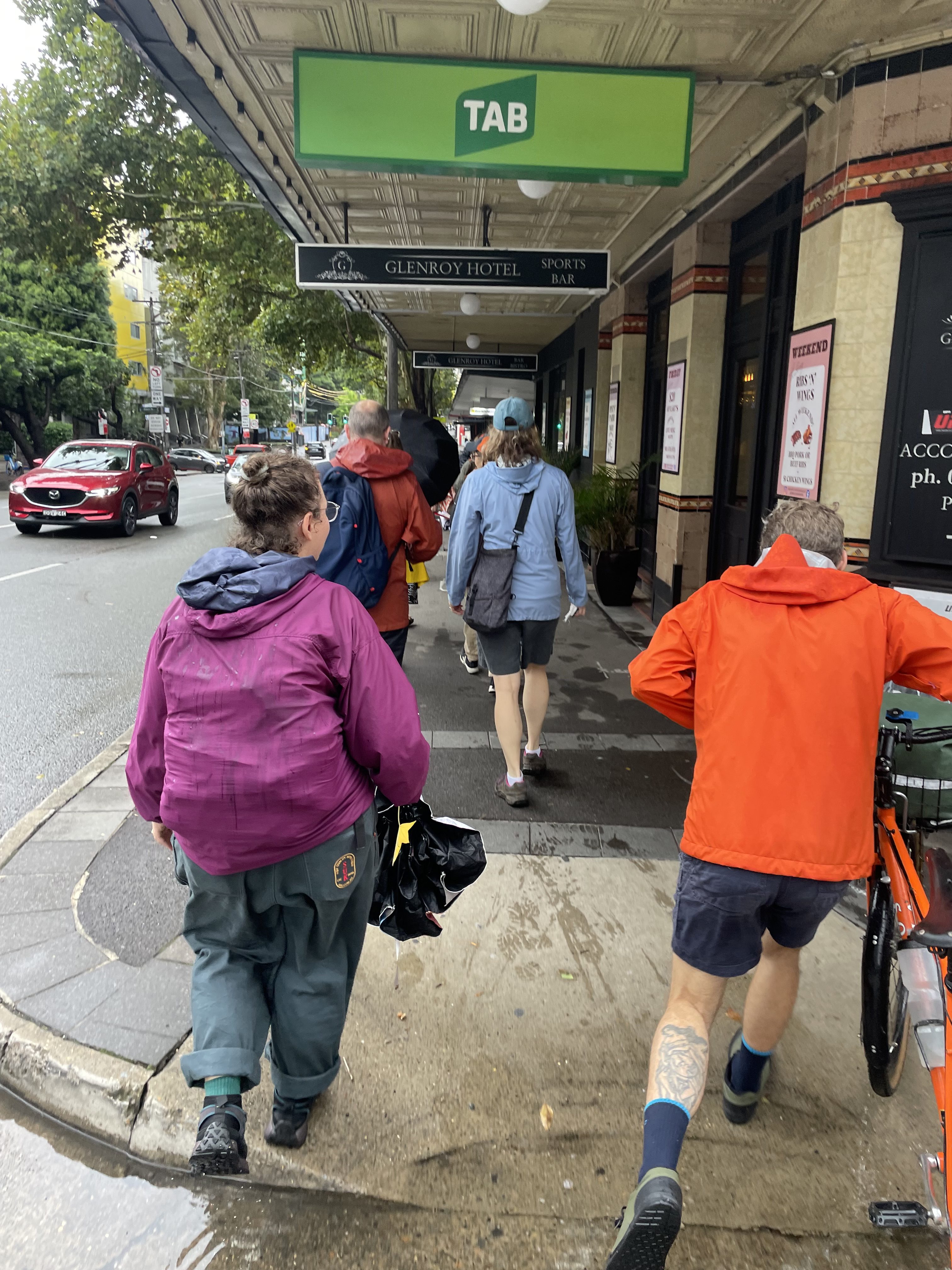
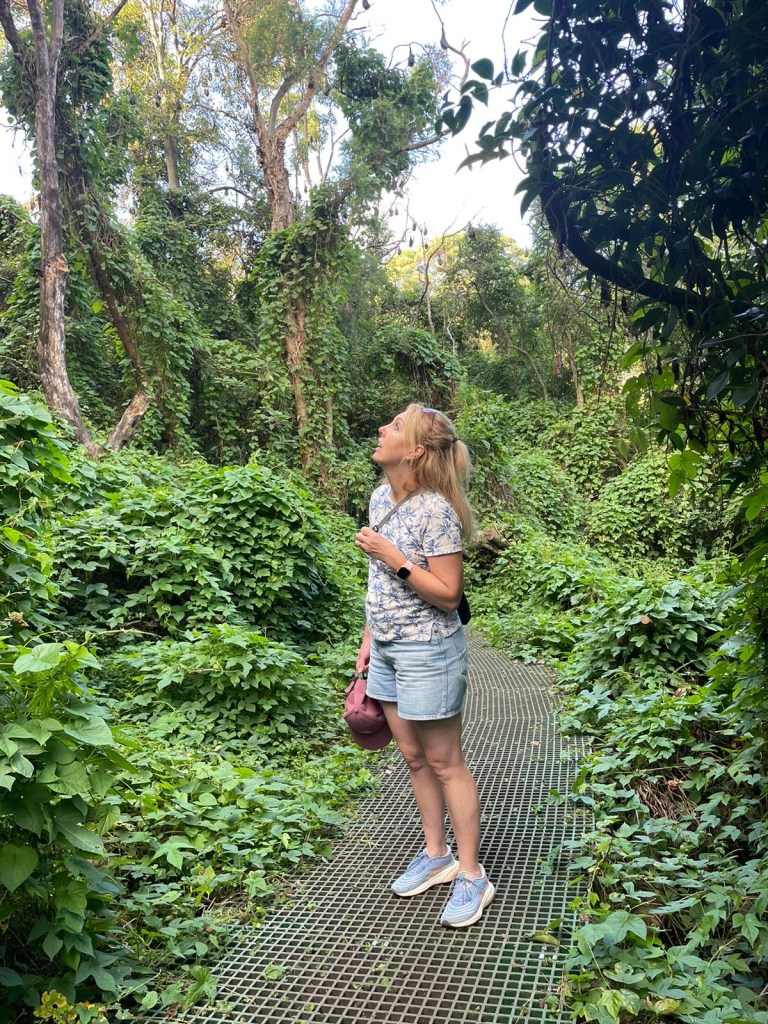
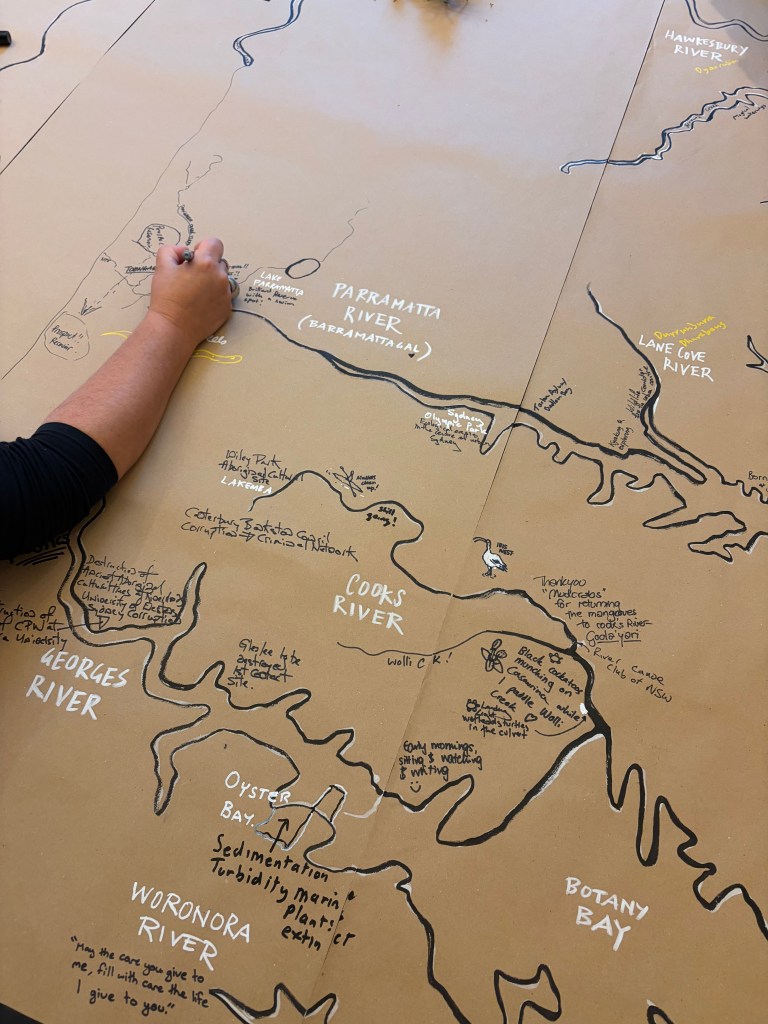
“We invite you instead to be guided by a photodiagram — a way to read the park as a socioecological system.
This walk invites you to experience the artificial wetlands of Sydney Park, located on sand dunes and wetlands Country between Kamay (Botan Bay) and Warʼran (Sydney Cove). It is now an iconic, award-winning piece of green infrastructure.
To understand the ecological and social significance of Sydney’s wetlands, we have to think back to how this Country was cared for before invasion — before the dredging and channelling that provided the hard surfaces the city was built on. Forests of turpentine and ironbark, swamps, marshes and heath, where Aboriginal people hunted, fished and camped at the creeks and rivers that crisscrossed the area.
There are plenty of walking paths in Sydney Park. They meander around the ponds and vistas — this storywalk guides you to three of them.
References:
Cardno. Alexandra Canal Catchment Flood Study — Report. NSW Government Office of Environment & Heritage and City of Sydney, 2014.
Fitzgerald, Shona K. “The Role of Constructed Wetlands in Creating Water Sensitive Cities.” Multifunctional Wetlands, Springer, 2018, pp. 171–206.
Foster, Shannon. “Bamuru (Kangaroo Grass).” The Green Square Atlas of Civic Ecologies, Frontyard Projects, 2022, pp. 44–49.
Jones, Sarah Jane, et al. “From Photo Documentation to Photo Diagrams.” Visual Communication, May 2024.
Murray, Lisa. “‘Big Smoke Stacks’: Competing Memories of Industrial Heritage.” A Cultural History of Sound, Memory, and the Senses, Routledge, 2016.
“Sydney Park: Kangaroo Ground to Brickpits.” The Dictionary of Sydney. Accessed 21 Aug. 2024.
“Sydney Park Wetlands: Major Works, Creation and History.” City of Sydney. Accessed 9 Aug. 2024.
Vanni, Ilaria, and Alexandra Crosby. Water Stories. ArcGIS StoryMaps. Accessed 3 Sept. 2024.
Wong, T. H. F. “An Overview of Water Sensitive Urban Design Practices in Australia.” Water Practice and Technology, vol. 1, no. 1, 2006.
Credits:
Project Team:
Sarah Jane Jones, Ilaria Vanni, Alexandra Crosby, Holly O’Neill, Kate Bowan, Alisa Croft,
Mikael Lindebergh, University of Technology Sydney and Shannon Foster at Bangawarra
Artwork by: Holly O’Neill
Photography by:
Finn Marchant, Ilaria Vanni, Sarah Jane Jones, Taylor Coyne
Riso Printing by: Pinch Press
Video by: Michael.Weatherill@uts.edu.au
This project was funded by the Creative Places initiative.