Urban Wetlands PhD researcher Holly O’Neil presented her paper ‘Disobedient Ecology: A productive and troublesome reframing of Sydney’s wetland entanglements’ at the…
PhD candidate on the Surfacing Urban Wetlands team, Holly O’Neil, presented her paper ‘Re-seeing the Swamp: how disobedient wildlife and graphic storytelling…
This years Institute of Australian Geographers conference explored how ’emergent geographies’ acknowledges the ways challenges arise out of complex interactions and behaviours…
Alexandra Crosby, Sarah Jane Jones and Holly O’Neil, from the Surfacing Urban Wetlands team, hosted their interactive workshop ‘Surfacing Urban Water’ at…
We joined the NCC a few weeks back for the ‘Sydney Rivers Community Forum’, where Sydney siders came together to discuss how best we can protect and care for our waterways.
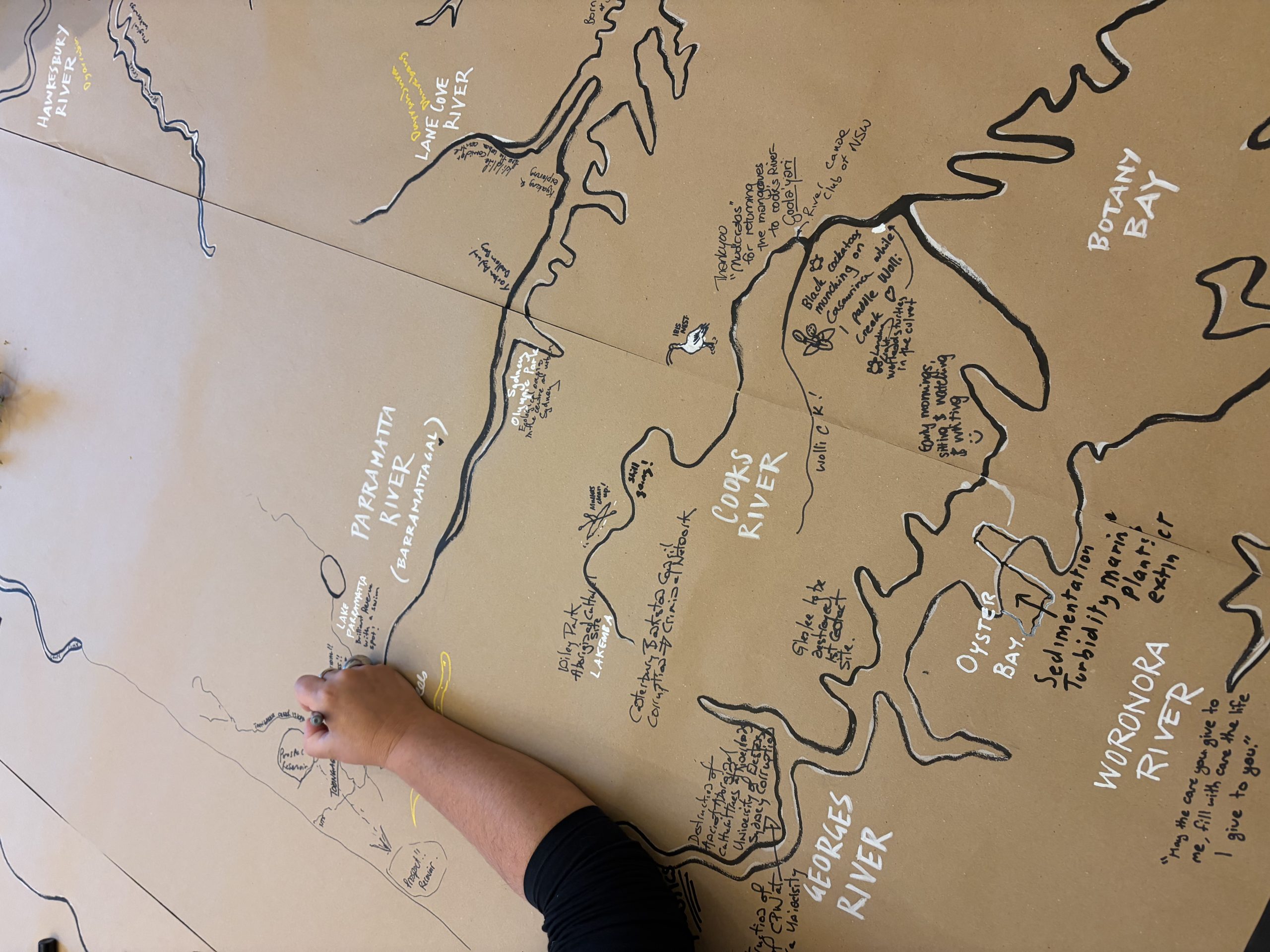
The team ran a community break out group discussing wetlands (see Holly’s drawing of the discussion above), asking the group what actionable asks they would like to put forward to the NCC. In the discussion, it was clear that personal connection to wetlands is a catalyst for care. As a group, we decided that asking for legislation that promotes water-sensitive urban infrastructure was the best way to streamline our concerns for a Sydney that considers water, rather than overlooks it.
Alexandra Crosby and Holly O’Neil headed to the Design Research Society conference to present the paper they wrote, alongside Sarah Jane Jones, ‘Surfacing wetlands through design ethnography and critical visualisation’. The conference was a mix of design researchers from around the globe, and the numerous dedicated more-than-human and sonic paper tracks provided interesting food for thought for the team.
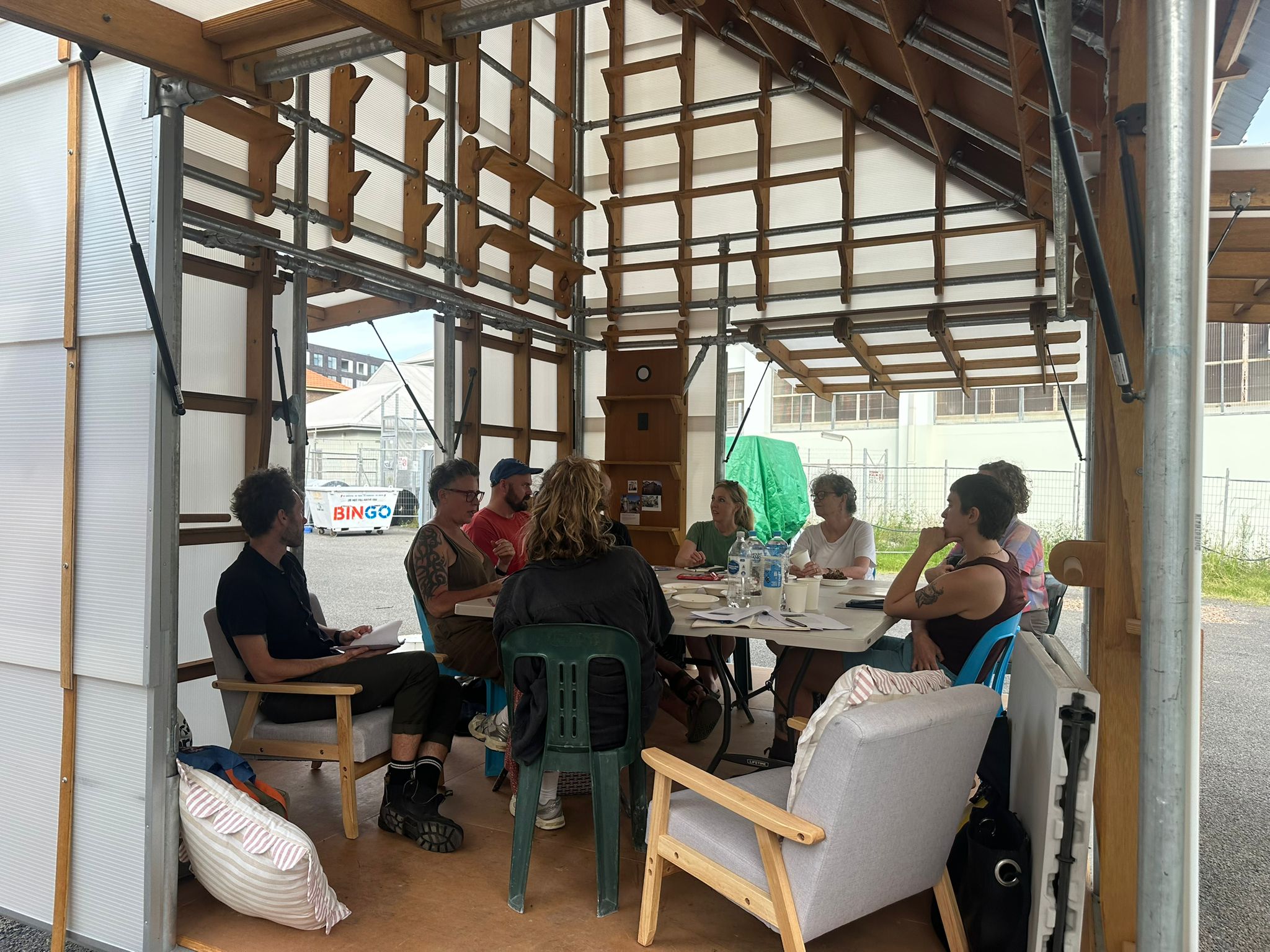
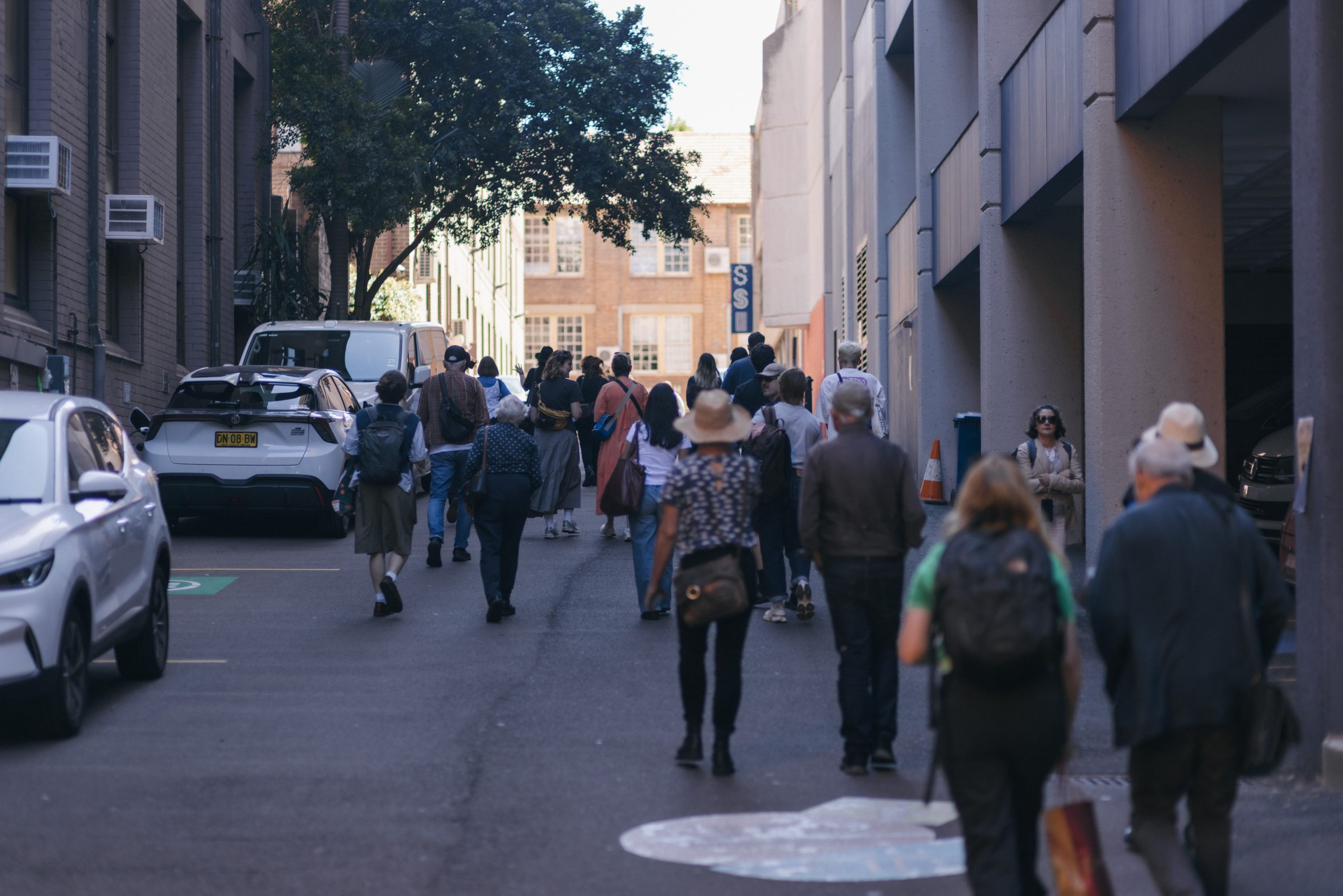
We met with our Swamposium Reading Group cohort for a walkshop to explore the watery connections between urban renewal at Waterloo and the Cooks River catchment.
In Sydney, like many other big cities, urban wetlands and waterways are undergrounded and unseen. Using archival maps, tracing paper, stamping and drawing materials, we worked on ways to visualise and care for our watery city through empowering, just, creative and open participation.
It was a very rainy day so the urban wetlands made themselves known through huge puddles, soggy paper, and plenty of flooding.
The Swamposium Reading Group’s first meeting was a wonderful space for discussing wetland research in Sydney, with a diverse group of academics, historians, artists, geographers, curators, and more joining us. Discussing Monty Hancock’s ‘Swamp City’ alongside Leah Gibbs’ ‘Water Places: Cultural, Social and More-Than-Human Geographies of Nature’, the discussion spanned water worlds, Sydney’s swampy infrastructure, ways of communicating complex ideas, and potential collaborations in future.
Don’t forget, if you’d like to be involved with the Reading Group, follow the links here to be included on our email chains and receive links to our readings.
Alexandra Crosby, Sarah Jane Jones, and Holly O’Neil, from the Surfacing Urban Wetlands, team will be travelling to Edinburgh to present their paper ‘Surfacing Wetlands Through Design Ethnography and Critical Visualisation’ at the DRS 2026 Conference.
We are excited to present this paper, connect with other design researchers, and listen to the other presentations at the DRS 2026.
We’re excited to be rejoining the Open Field Agency at their Field Rooms home to run a walkshop inspired by our discussions at Swamposium 2025.
Join us on the 8th of March 2026 for a walkshop to explore the watery connections between urban renewal at Waterloo and the Cooks River catchment. This will be a part of our continued effot to visualise and care for our watery city through empowering, just, creative and open participation.
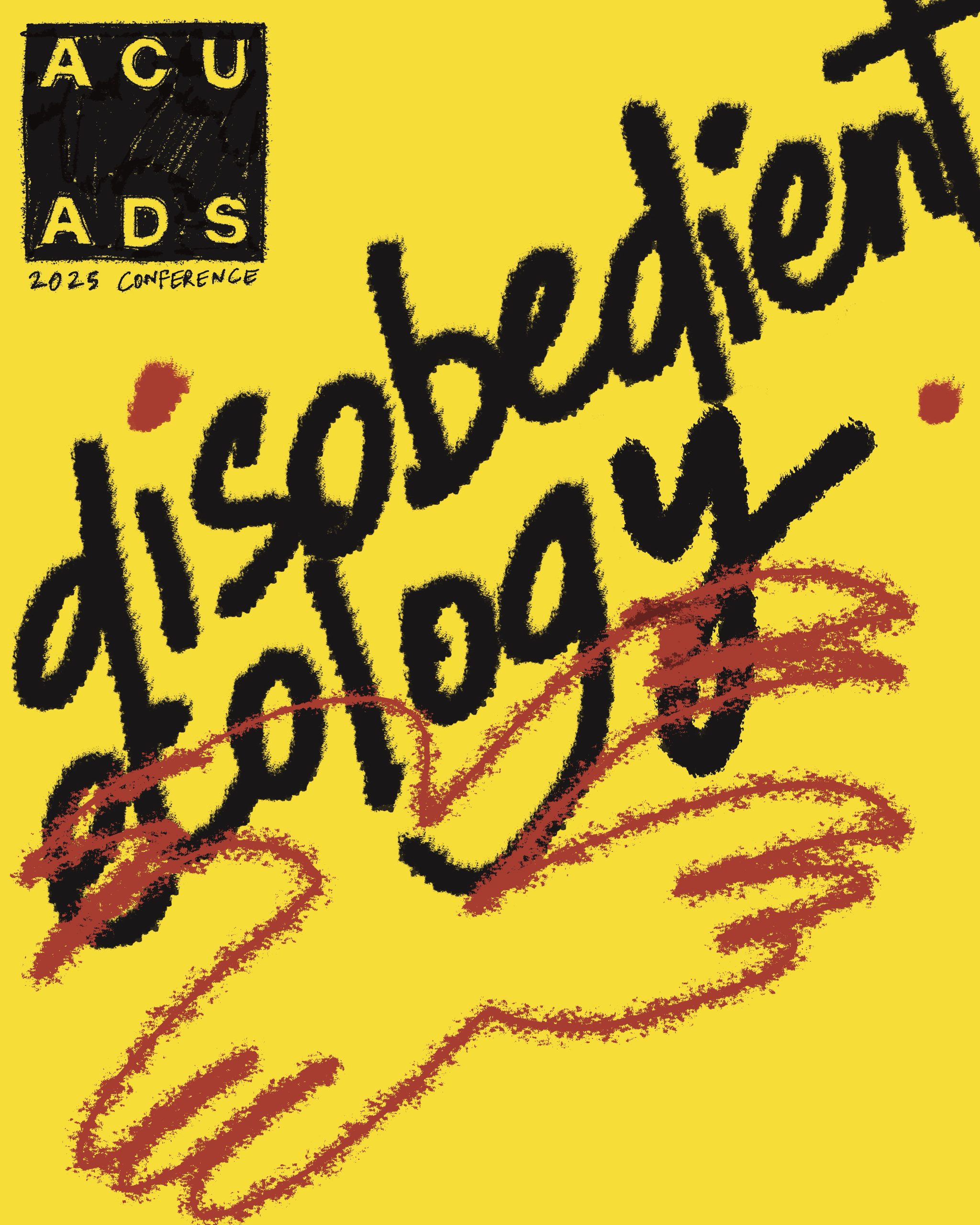
Urban Wetlands PhD researcher Holly O’Neil presented her paper ‘Disobedient Ecology: A productive and troublesome reframing of Sydney’s wetland entanglements’ at the 2025 ACAUDS conference.
We’re thrilled to celebrate Bangawarra‘s 10 year anniversary this year. Bangawarra is the embodiment of a unique partnership led by D’harawal eora Knowledge Keeper Dr Shannon Foster and Wugulora academic Jo Paterson Kinniburgh. The Bangawarra team is the bridge between the wisdom of Ancestral knowledge and contemporary design practices, committed to the sustainable stewardship of Country.
Bangawarra are uniquely positioned to consult on how to visualise and realise a connecting with Country approach for the three urban renewal sites.
Bangawarra provides advice on place-based design research on Country through Indigenous Research Methods, such as ‘walking up Country’ (Foster and Kinniburgh 2019) and yarning.
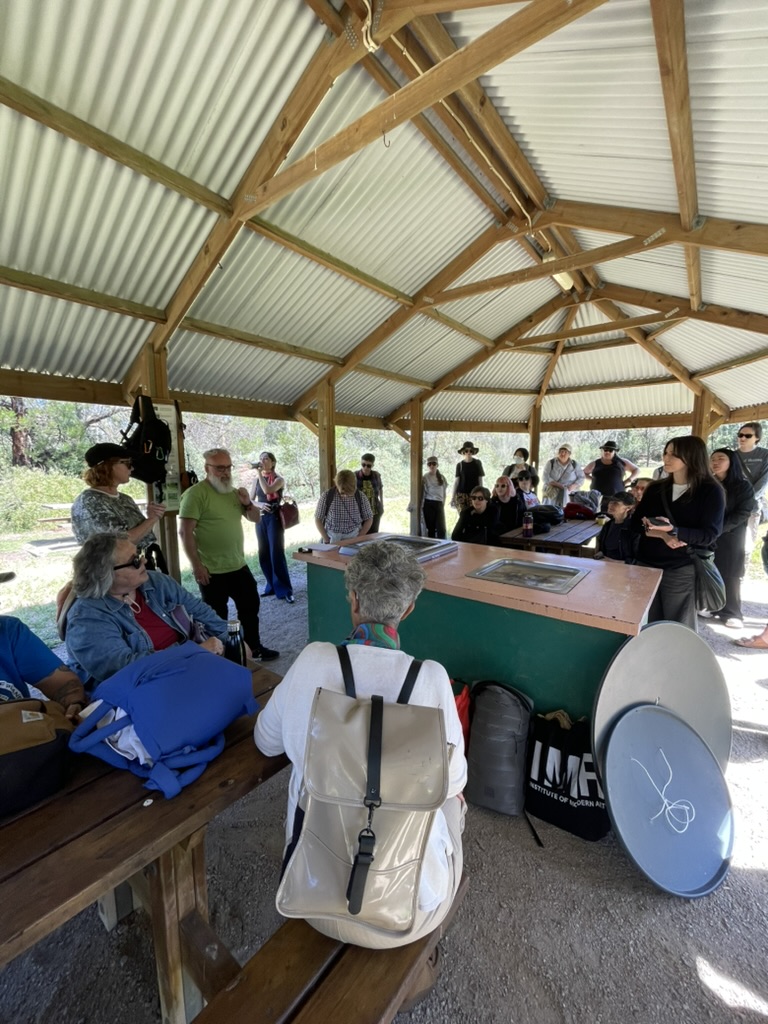
In November 2025, the urban wetlands team ran the Swamposium, an opportunity for a small group of researchers and creative practitioners to spend the day together. Right in the middle of the construction site at Dank Street South Precinct, where the undergrounded waterways connect with Alexandra Canal, we met on Country as residents of the Open Field Agency (OPA) to talk about urban wetlands, swamps, creeks and canals.
The OPA began in 2017 by artist Heidi Axelsen and architect Hugo Moline (MAPA). The OFA reframes public art as an ongoing, community-based project, working closely within the complex processes of urban redevelopment. This approach was conceived of for the Dank Street South Precinct after many discussions with locals and community organisations about how to maintain social and spatial openness of a place which is undergoing rapid transformation. In their discussions with the local community about the Dank Street South Precinct MAPA were faced with a series of questions:
How can this place become and remain truly public?
How can we bring together the voices of new and old communities and in process enrich a public space where all feel welcome?
How can we harness the power of redevelopment to resist exclusive gentrification and make space for existing communities of First Nations, working class people and creatives in the city?
How can we embed ongoing creation of culture here, now and into the future?
The event has led to the creative of the Swamposium Reading Group, and has paved the way for a series of walks in early 2026.
The urban wetlands team have worked with UTS’ ‘Creative Places’ grant to test out some of our research methodology and wayfinding design in place. Locating Ultimo’s long-gone Blackwattle Swamp, the team worked on a series of walks, AR activations, and place-based storytelling to resurface the creek that flowed (and still flows through the drains) to Wentworth Park.
We joined a unique event hosted by the NSW Branch of the Australian Marine Sciences Association (AMSA) on the Hawkesbury. It brought together researchers, councils, government, and community organisations with a shared interest in estuaries.
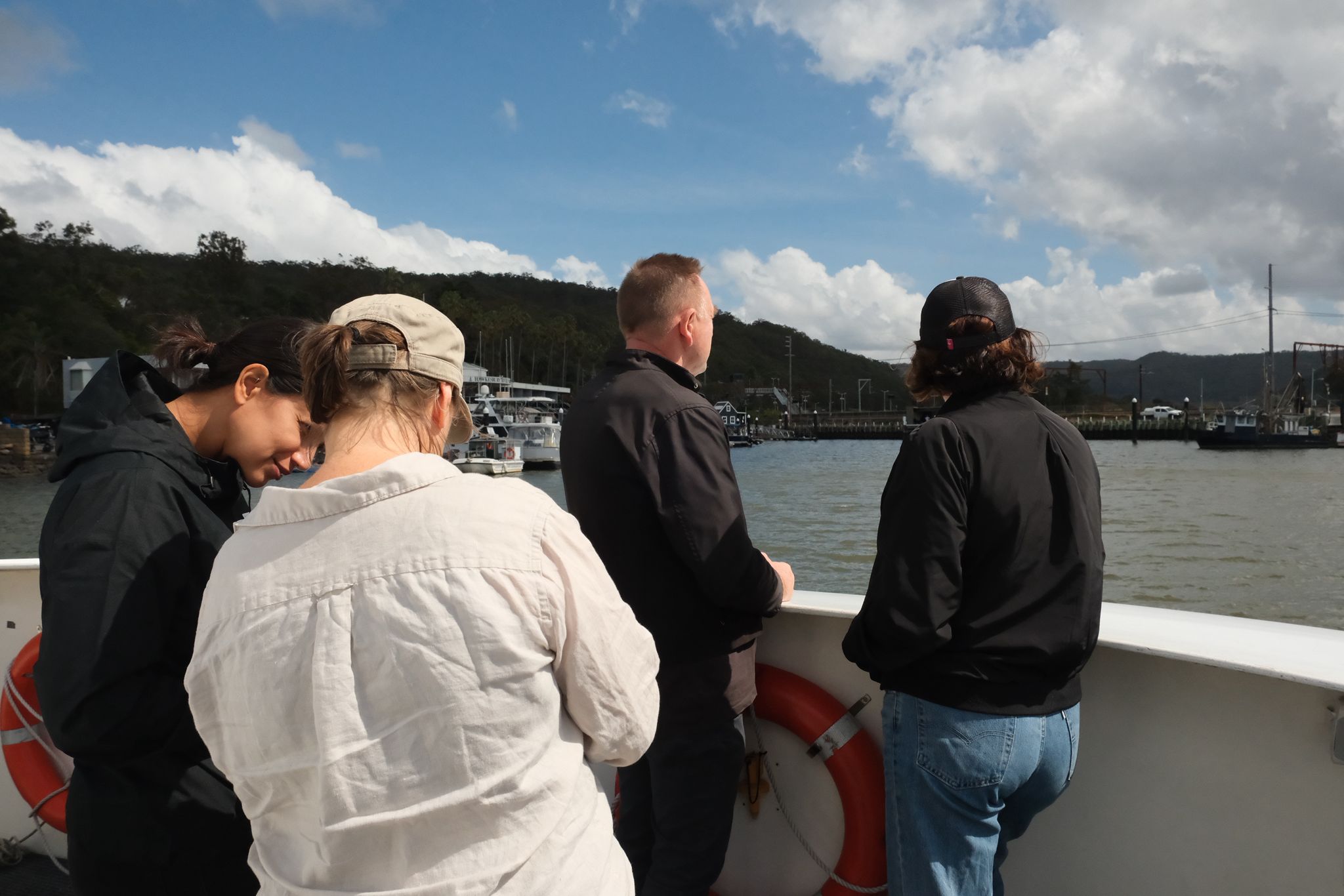
Over a delightful 2 hour river cruise down the Hawkesbury, attendees heard talks by researchers and industry leaders (including us), nibbled on snacks, and received a tour of river landmarks – all while networking and fostering a sense of community. We shared our work on urban wetlands and explained how better visualisation of wetlands and waterways could contribute to better care of these important ecosystems.
Huge thanks to the Hawkesbury Estuary Coastal Management Program councils for supporting the event, our AMSA NSW organiser and C-SERC colleague Carla Sbrocchi, for inviting us.
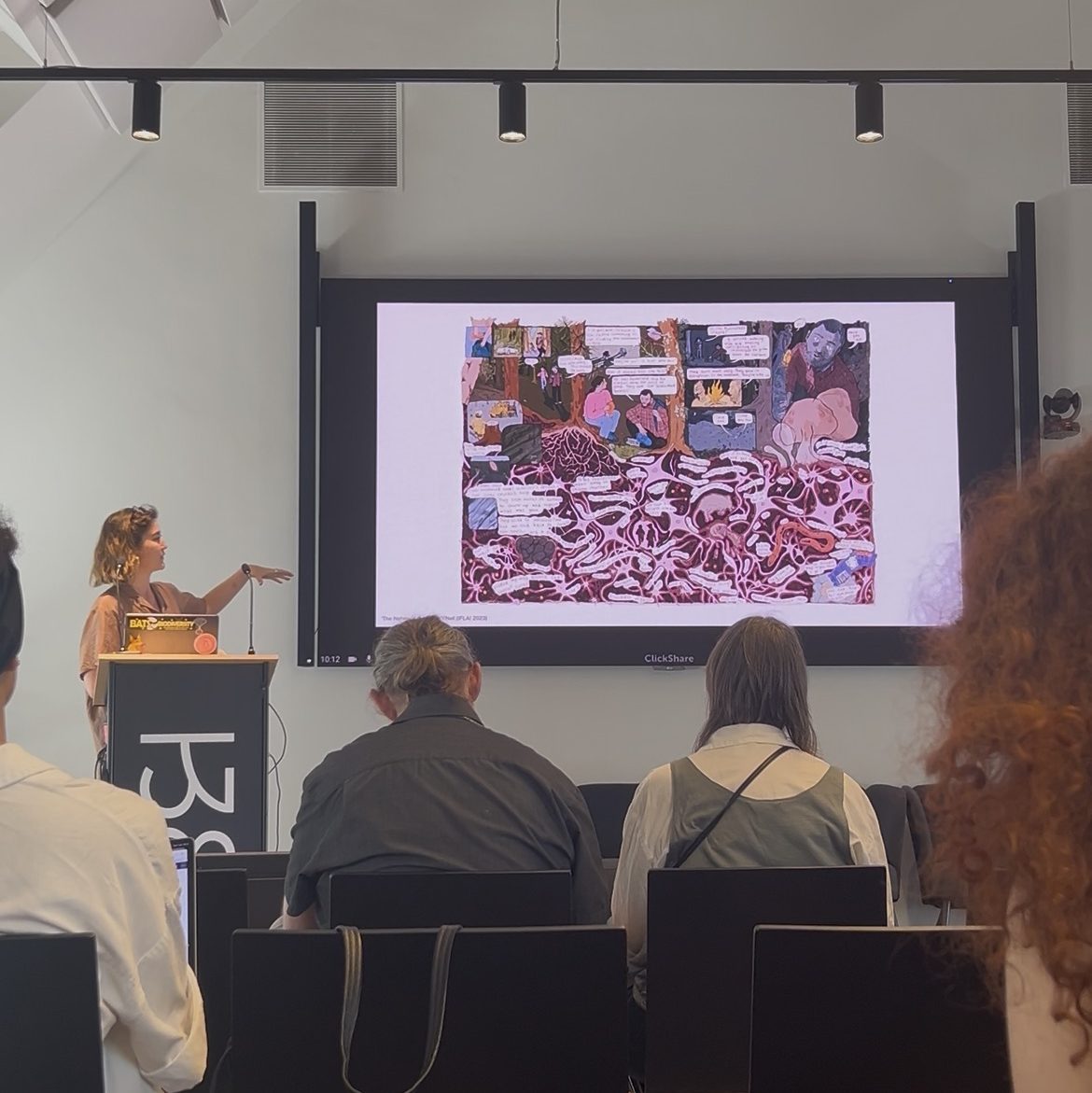
PhD candidate on the Surfacing Urban Wetlands team, Holly O’Neil, presented her paper ‘Re-seeing the Swamp: how disobedient wildlife and graphic storytelling can re-present and re-surface the “unsightly” wetlands of Sydney’. Looking at drawing as method for re-seeing and re-approaching complex eco-narratives, O’Neil joined a panel of makers and theorists alike to talk about ‘Eco-comics’ at the conference in Brussels.
This years Institute of Australian Geographers conference explored how ’emergent geographies’ acknowledges the ways challenges arise out of complex interactions and behaviours that require greater emphasis on interdisciplinary thinking and approaches.
James Goodman and Ilaria Vanni, from the Surfacing Urban Wetlands team, presented at the conference. Goodman presented his paper, ‘Urban social movements and climate change: new ‘rights to the city’?’, and Vanni presented ‘Neighbourhood Ecologies. Design research for urban environments’ and ‘Capital, water, cities’.
Alexandra Crosby, Sarah Jane Jones and Holly O’Neil, from the Surfacing Urban Wetlands team, hosted their interactive workshop ‘Surfacing Urban Water’ at the AusSTS ‘Signals and Noise’ conference 2025 in Melbourne.
The workshop, reflected on how the visualisation of wetlands and waterways in cities fundamentally impacts how we imagine the urban environment and our role in caring for it. The team used the workshop to showcase their protocol to empower participants to ‘read’ their local ecologies and better connect to them through photodiagrams – a protocol based on ethnographic and visual communication methods. In the workshop, participants learnt how to make and use photodiagrams to read, analyse, document, and share watery urban ecologies.
The workshop took place at the National Communication Museum. The resulting photodiagrams were exhibited for the duration of the conference.
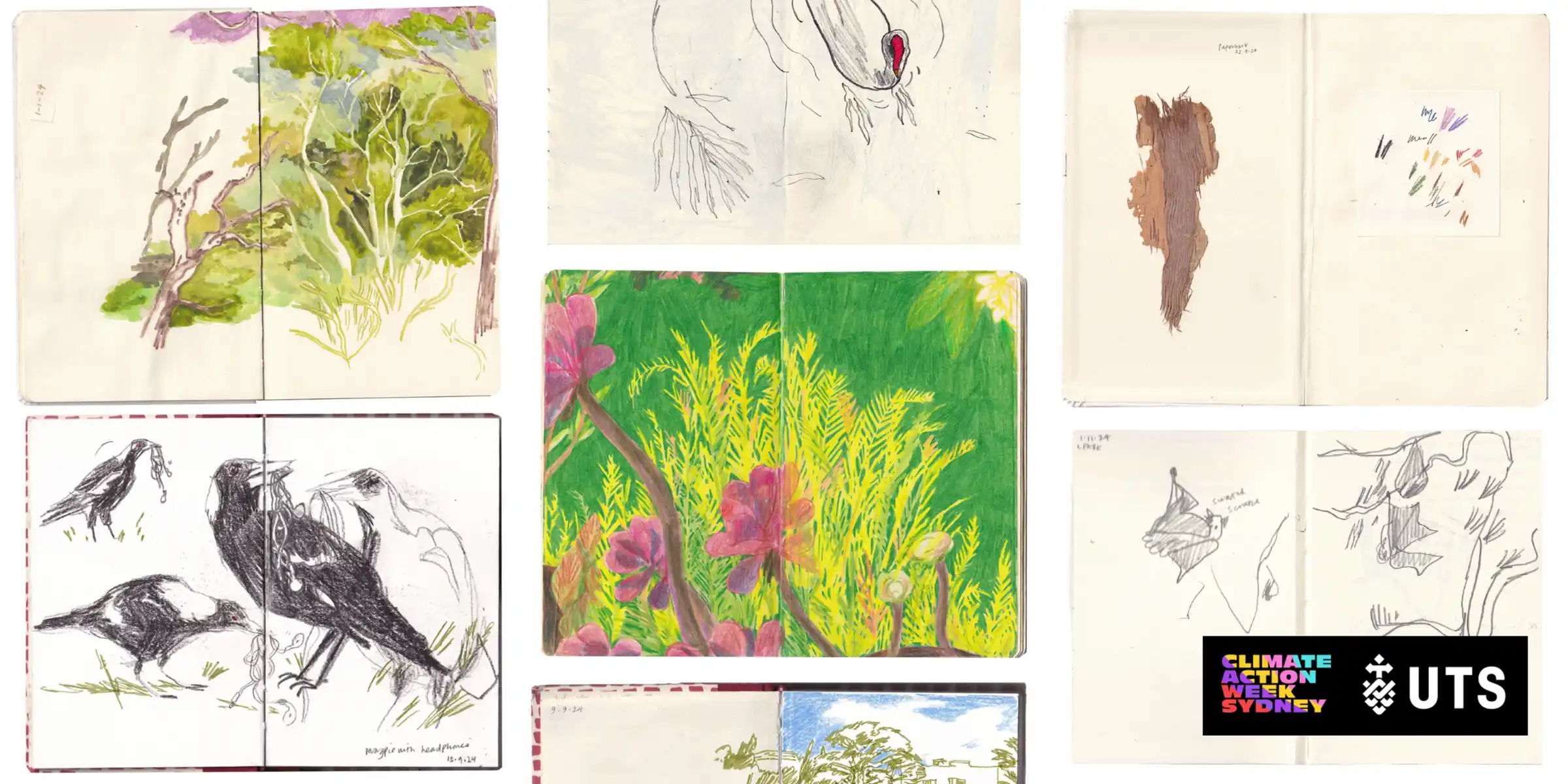
Holly O’Neil, our research assistant, shows off some of the results from our recent Sydney Park workshops as part of DrawSpace Gallery’s ‘Walk With Me’ exhibition. Showing layers of story, habitat, and history, the workshops invited participants to interact with the wetlands through drawing and noticing.
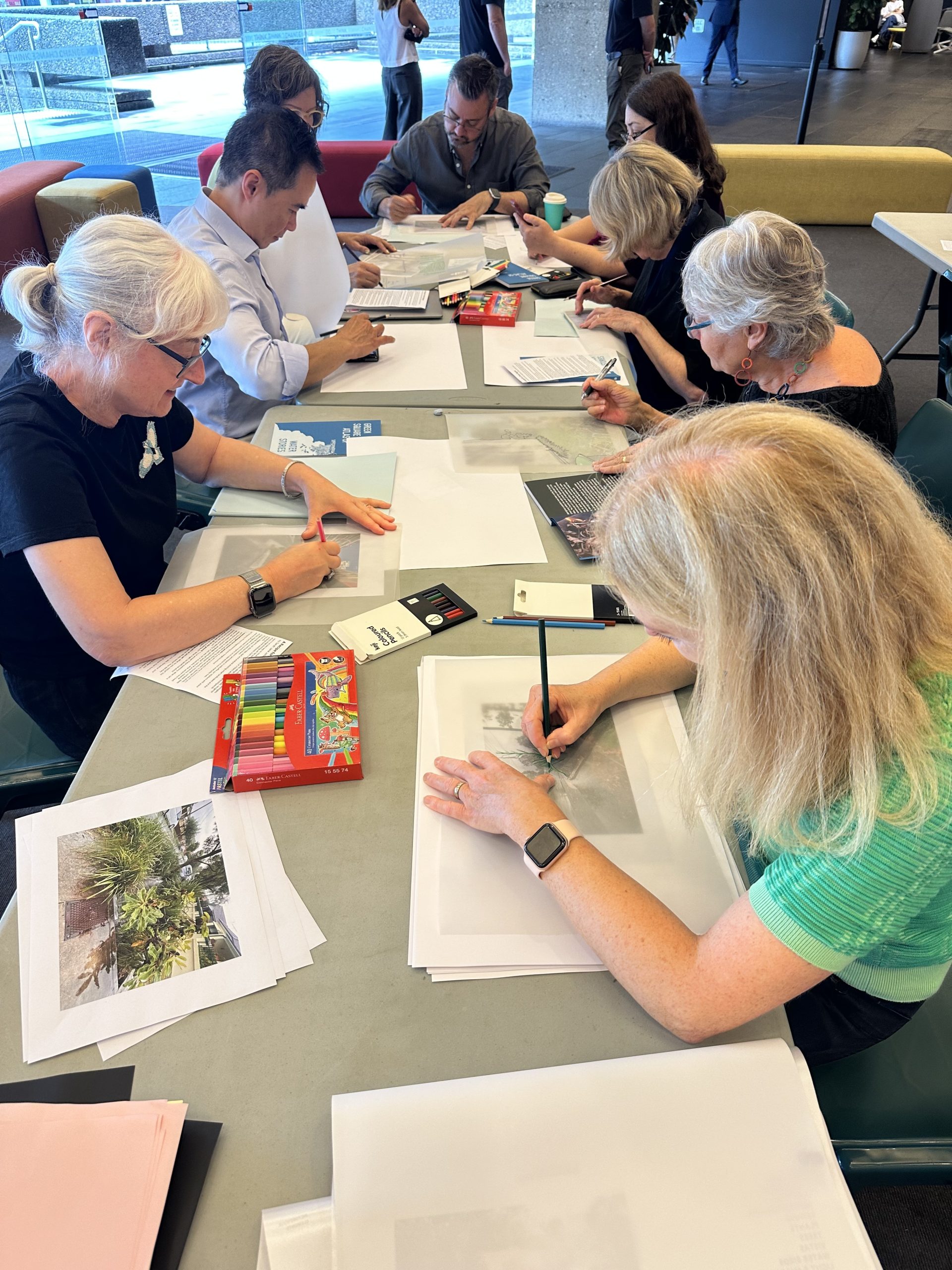
When is a tree not just a tree? and a drain not just a drain? When it’s a rain garden! Thanks to everyone who joined our Climate Action Week workshop on visualising urban ecologies. Climate Action comes in many different forms- the way we visualise nature in cities shapes how we see our role in caring for the urban environment, especially at this time of climate-driven environmental change, our engagement with urban ecologies is crucial.
In this workshop, participants learnt to use “photodiagrams” — a creative tool for reading, analysing, and sharing your local ecology. Explore the impact of climate change and uncover hidden stewardship practices in your neighbourhood.
Participants were asked to bring a photo and follow a series of steps to better understand and engage with urban ecologies!
On the 14th of March, 2025, Dr Sarah Jane Jones and Holly O’Neil will be taking part in a project share as part of the Visualisation Institute’s take on Sydney Climate Action Week at UTS, run by Zoë Sadokierski. The event, ‘Lightning Talks: Creative Solutions for Sustainable Futures with UTS Visualisation Institute’ explores different practices to allow audiences to “discover everything from community storytelling events where narratives about climate change range from cheeky to devastating; to a housing prototype protecting urban pollinators, and a collaboration between fashion and choreography exploring transformation in living systems.”
From the 10th to the 19th of February 2025, team members Dr. Sarah Jane Jones and Holly O’Neil travelled to Melbourne for the annual Posthuman Summer Lab. The interdisciplinary laboratory explores the intersections between posthuman methods and First Peoples knowledges, in consultation with Boonwurrung elder N’arweet Professor Carolyn Briggs AM, and Professor Rosi Braidotti.
The lab itself was led by Dr Fiona Hillary (RMIT School of ARt) and Dr Troy Innocent (RMIT School of Design/ future play lab) and was a Planetary Civics Initiative. Over the lab, we developed place-based, collaborative projects to expand posthuman methods, to be published in a second book under the laboratory’s output.
Throughout our time in Melbourne, we experimented with how to enact socially responsible and ethically considerate methodologies to explore posthuman scholarship and Indigenous knowledges. In Holly’s collaboration, the group reflected on the colonial and human-centric field of mapping, deciding to propose an alternative way to consider mapping in ways that might celebrate and represent multiple perspectives, temporalities, and knowledges.
In Dr. Sarah Jane Jones’ collaboration, the group explored experimental and non-linear methodologies around games in order to encourage deeper connection with place and Country. Utilising the groups many skillsets, such as coding, graphic design, play, and place-making, the game will provide essential ways to think about how we live on and with Country. The outcome of these methodological experiments will be available in the second Posthuman Summer Lab book publication.